
The 10 Best Investing Books for Beginners (2026)
The best investing books for beginners, ranked by how useful they are before you invest your first dollar — index funds, risk, and behaviour.
Investing books fall into two camps: the ones that make you a better investor, and the ones that make you feel like one. This list is strictly the first kind.
The order matters. Start with the books about costs and diversification, because those decisions explain most of your long-term result. Only then read the stock-picking classics — they are excellent, but they are not where a beginner should begin.
Every book below has a full summary on Gistlets, and the Amazon links go to the editions we recommend.
📊 Quick picks
The short version, with the reason each book is here.
| # | Book | Best for | Rating | |
|---|---|---|---|---|
| 1 | The Little Book of Common Sense Investing John C. Bogle |
your first investing book | 4.5/5 | Amazon |
| 2 | The Bogleheads' Guide to Investing Taylor Larimore, Mel Lindauer & Michael LeBoeuf |
a complete, calm plan | 4.7/5 | Amazon |
| 3 | The Intelligent Investor Benjamin Graham |
understanding value and risk | 4.8/5 | Amazon |
| 4 | A Random Walk Down Wall Street Burton G. Malkiel |
scepticism about stock picking | 4.6/5 | Amazon |
| 5 | Common Stocks and Uncommon Profits Philip A. Fisher |
how great companies compound | 4.6/5 | Amazon |
| 6 | One Up On Wall Street Peter Lynch |
learning to research a company | 4.5/5 | Amazon |
| 7 | The Little Book That Still Beats the Market Joel Greenblatt |
the evidence in one sitting | 4.5/5 | Amazon |
| 8 | The Most Important Thing Howard Marks |
thinking in risk, not returns | 4.7/5 | Amazon |
| 9 | Just Keep Buying Nick Maggiulli |
investing consistently through fear | 4.5/5 | Amazon |
| 10 | Against the Gods Peter L. Bernstein |
the history of risk itself | 4.3/5 | Amazon |
As an Amazon Associate we earn from qualifying purchases. This does not change the price you pay.
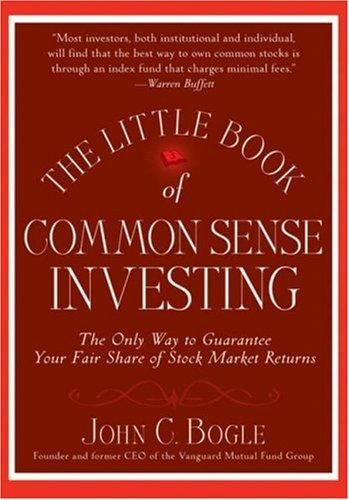
The Little Book of Common Sense Investing
John C. Bogle · 2007 · 216 pages · 4.5/5
Best for: your first investing book
The cleanest explanation of why low-cost index funds win. Short enough to finish in a weekend, rigorous enough to change what you do on Monday.
John C. Bogle’s quiet, radical case for owning the whole market at the lowest possible cost — and why the average investor can beat most professionals.
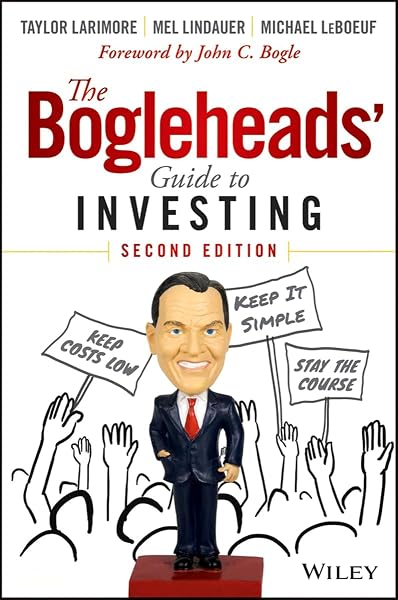
The Bogleheads' Guide to Investing
Taylor Larimore, Mel Lindauer & Michael LeBoeuf · 2006 · 336 pages · 4.7/5
Best for: a complete, calm plan
The practical companion to the book above: asset allocation, rebalancing, taxes and all the unglamorous mechanics a beginner actually needs.
The calm, low-cost path to investing: index funds, sensible asset allocation and discipline — nothing more.
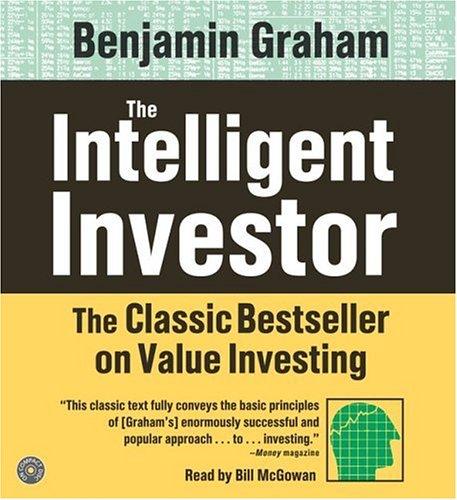
The Intelligent Investor
Benjamin Graham · 1949 · 640 pages · 4.8/5
Best for: understanding value and risk
The foundational text on margin of safety and Mr. Market. Dense, but the chapters on temperament are worth more than most modern books entire.
The book that taught Warren Buffett to invest. A foundational guide to value investing and protecting yourself from yourself.
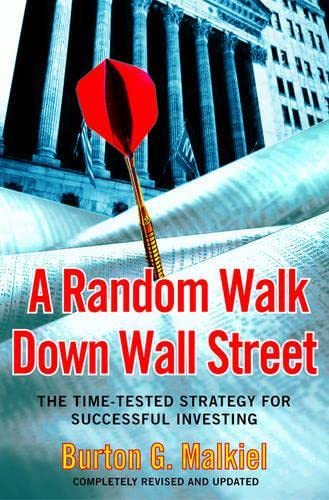
A Random Walk Down Wall Street
Burton G. Malkiel · 1973 · 432 pages · 4.6/5
Best for: scepticism about stock picking
A readable tour of why professionals rarely beat the market, and what that implies for your own portfolio. The best antidote to a hot stock tip.
The classic case for index investing: markets are extremely hard to beat, so buy the whole market and stop trying.
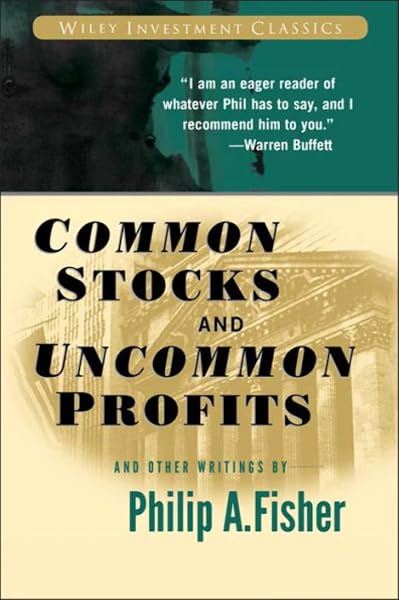
Common Stocks and Uncommon Profits
Philip A. Fisher · 1958 · 320 pages · 4.6/5
Best for: how great companies compound
Philip Fisher's checklist for finding durable businesses. Older than most readers, but the questions it asks about management and growth are still the right ones.
The classic case for buying a few outstanding companies and holding them for decades — and the fifteen-point method for finding them.

One Up On Wall Street
Peter Lynch · 1989 · 304 pages · 4.5/5
Best for: learning to research a company
Peter Lynch shows how an ordinary investor can study a business they already understand. Useful if you want to own individual stocks with a process instead of a hunch.
Peter Lynch’s plain-spoken guide to finding tenbaggers in everyday life: know what you own, dig into the story, and ignore the market’s daily noise.
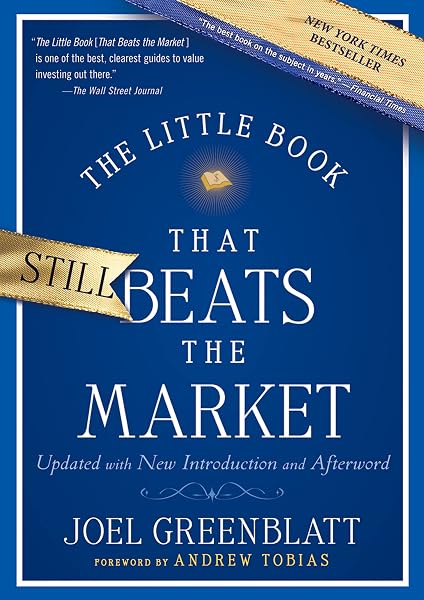
The Little Book That Still Beats the Market
Joel Greenblatt · 2005 · 208 pages · 4.5/5
Best for: the evidence in one sitting
A short, data-first case for index investing from a lifelong market researcher. If you only read one chapter on fees and returns, make it this one.
A simple, mechanical formula for buying above-average companies at below-average prices — and the uncomfortable reason most people still fail at it.
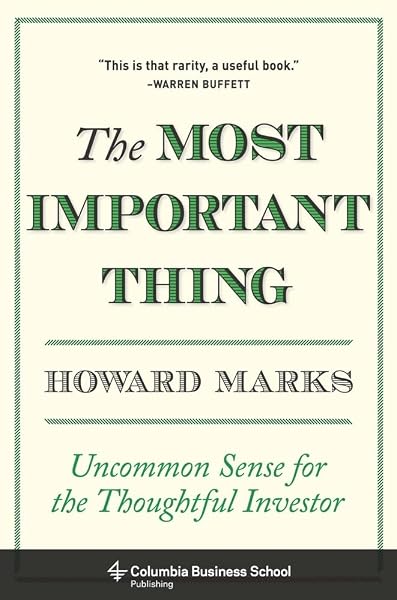
The Most Important Thing
Howard Marks · 2011 · 200 pages · 4.7/5
Best for: thinking in risk, not returns
Howard Marks on second-level thinking and avoiding permanent loss. It will not tell you what to buy; it will change how you size what you buy.
Howard Marks on risk, cycles and second-level thinking — the insights behind decades of celebrated investor memos.
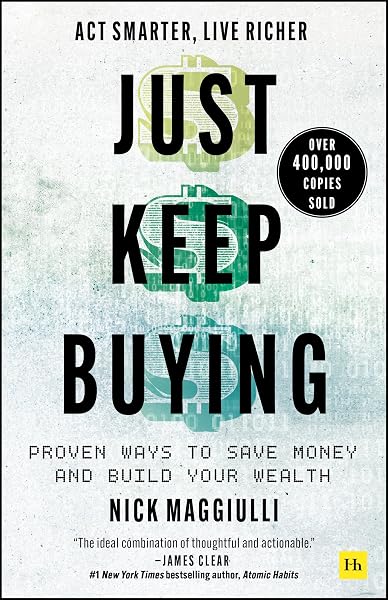
Just Keep Buying
Nick Maggiulli · 2022 · 296 pages · 4.5/5
Best for: investing consistently through fear
A modern, data-heavy argument for buying regularly regardless of headlines. The chapter on why market timing fails is worth the price alone.
Personal finance decisions tested against actual market data instead of folklore. The answer to most timing questions turns out to be: buy regularly and stop watching.
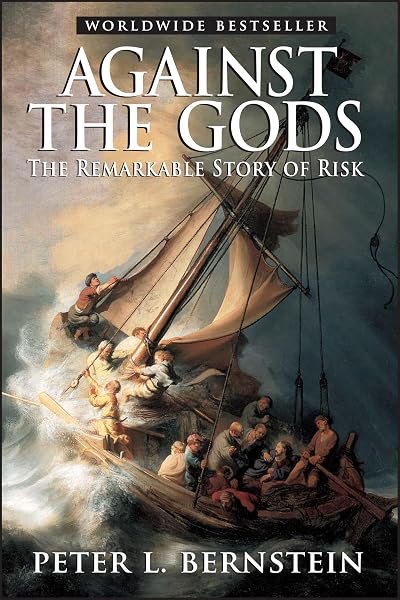
Against the Gods
Peter L. Bernstein · 1996 · 400 pages · 4.3/5
Best for: the history of risk itself
A surprising page-turner about how humans learned to price the future. It gives you context for every probability you will ever see in an investing book.
The history of how humanity learned to think about risk — from dice games to insurance to derivatives. The book that explains why insurance exists and why your intuition about probability is so bad.
How to choose
If you have not opened a brokerage account yet, read The Little Book of Common Sense Investing and The Bogleheads' Guide first. They cover the decisions that determine 90% of your result.
If you are drawn to individual stocks, read One Up on Wall Street and Common Stocks and Uncommon Profits — but only after you have a boring index core.
If you panic-sold during a downturn, read The Most Important Thing and Just Keep Buying. The problem is temperament, not information.
Avoid starting with The Intelligent Investor unless you enjoy dense material. It rewards patience, but it is not the gentlest first step.
Frequently asked questions
What is the best investing book for a total beginner?
The Little Book of Common Sense Investing. It explains the one decision that matters most — owning low-cost index funds — with evidence rather than opinion, and it is short enough to finish before your enthusiasm fades.
Should I read The Intelligent Investor first?
No. It is a great book, but it assumes patience with dense prose and some familiarity with markets. Start with a modern index-investing book, then come back to Graham for the chapters on risk and temperament.
Are these books US-specific?
Partly. The principles are universal, but account types, tax rules and fund names differ by country. Use the books for the reasoning, then check local rules for the wrappers you actually use.
Do investing books still work in 2026?
The ones on this list do, because they are about costs, diversification and behaviour rather than predicting the next hot sector. Anything that promises a specific market call ages badly; these do not make that promise.
📚 More buying guides
More ranked lists for the problems you are solving next.