Common Stocks and Uncommon Profits
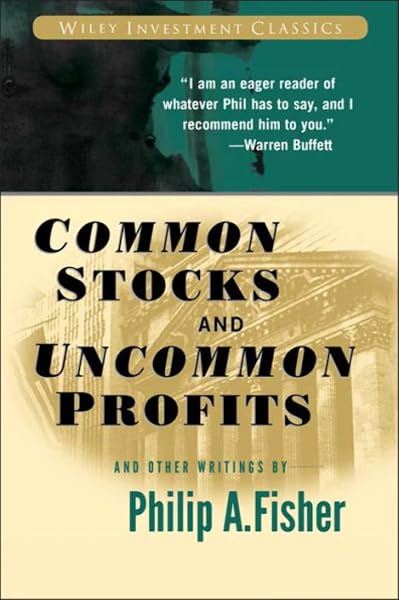
The classic case for buying a few outstanding companies and holding them for decades — and the fifteen-point method for finding them.
The idea that was unusual in 1958
When Fisher wrote this, the respectable approach to investing was statistical: find cheap stocks, buy them, sell them when they stopped being cheap. Fisher argued for something almost heretical — buy a small number of unusually good companies and then, for practical purposes, never sell them.
The reasoning is not sentimentality. If a company can compound its earnings for twenty years, the cost of selling it and finding a replacement is enormous: taxes, transaction costs, and the near-certainty that the replacement is worse.
The fifteen points
Most of the book is a checklist for judging a business. The points cluster into four questions.
Does the product have room to grow? Fisher wants a product or service with enough market ahead of it to support years of sales increases, not one good year.
Is management serious about the future? Three of his points ask whether management is developing new products, running research effectively, and doing so efficiently rather than lavishly.
Is the sales organisation actually good? A great product with weak distribution loses to a good product with strong distribution — a reality that technology founders keep rediscovering.
Does the company protect its margin? Fisher asks about profit margins and what management is doing to maintain or improve them, because growth in revenue with shrinking margin is not progress.
Scuttlebutt
Fisher's most famous method is the least glamorous: go and ask people who actually know. Talk to suppliers, competitors, former employees, customers and researchers. Read what the industry reads.
This is the ancestor of modern due diligence, and it cuts both ways: conversations reveal problems long before the accounts do.
When to buy and when to sell
Fisher is blunt about timing. Buy when a good company is temporarily out of favour — a disappointing quarter, a market panic, a product delay that does not change the long-term story.
He gives three reasons to sell, and rejects almost everything else:
- You made a mistake. The company is not what you thought. Admitting it early is cheaper.
- It no longer meets your criteria. The fundamentals genuinely deteriorated, not merely the price.
- A far better opportunity exists, and you have no other money to use. This is rare, and should not be an excuse for constant trading.
Notably absent from that list: the stock has gone up a lot, or the market looks expensive.
The cost of the strategy
Fisher is honest that this approach demands patience and tolerance for looking wrong for long stretches. A great company can trade sideways for years while its business quietly grows underneath.
It also demands concentration. He is comfortable with a handful of holdings, which means a single bad judgement hurts more than it would in a diversified index fund.
A fair critique
Two limits matter today. First, the book assumes you have the time and skill to research individual companies; most people do not, and a broad index fund is the wiser default. Second, Fisher writes in a slow, anecdotal style, and the fifteen points are memorable but not a complete framework for modern valuation.
Read it for the quality-over-cheapness mindset and the discipline of asking real people real questions.
🔑 Key actionable ideas
- Buy a few outstanding companies and hold them for a very long time.
- Selling a great business to chase another one usually destroys value through taxes and mistakes.
- Judge management by what it spends on the future, not by what it says.
- A strong sales organisation is as important as a strong product.
- Do "scuttlebutt" research: ask suppliers, customers, competitors and former staff.
- Buy good companies when they are temporarily out of favour.
- Sell only for a genuine mistake, a real deterioration, or a clearly better use of the money.
Who is this book for?
Investors willing to research individual companies and hold for decades — and anyone who wants to understand the case against constant trading.
Final verdict
A foundational book on investing in quality rather than cheapness. Demanding and dated in style, but the discipline of investigating a business properly remains unmatched.