The Little Book of Common Sense Investing
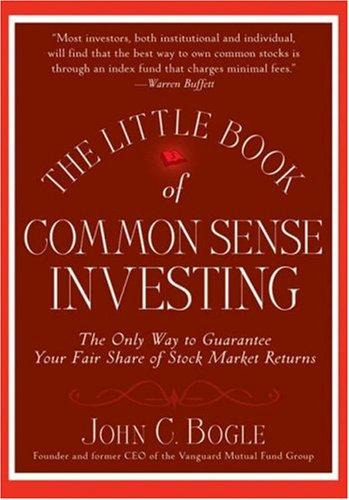
John C. Bogle’s quiet, radical case for owning the whole market at the lowest possible cost — and why the average investor can beat most professionals.
The Core Idea
Bogle’s argument fits on a postcard. Because investors in aggregate must earn the market’s return before costs and less than that after them, the winning move for almost everyone is to own the entire market at the lowest possible cost — and then do as little as possible. It is a conclusion so simple that the industry built on the opposite behaviour has spent decades trying to make it sound naive, when the evidence keeps pointing the same way.
The Arithmetic That Cannot Be Escaped
Active trading does not create wealth; it redistributes it, and every trade, fee and tax bill is a leak out of your pocket. A dollar paid to a fund manager is a dollar no longer compounding for you, and over decades that small annual drag can separate a comfortable retirement from a modest one. The maths is unforgiving because it compounds in both directions: costs grow just as steadily as returns.
Own the Haystack
Hunting for the next great company is like searching for a needle in a haystack. Bogle says buy the haystack instead: a broad index fund that holds essentially every stock, so you never have to guess the winner and you never risk missing it either. You give up the dream of picking the one brilliant stock, and in exchange you get the certainty of owning all of them at a very low price.
Time and Reversion
Mean reversion punishes yesterday’s champions, and star managers rarely stay stars for long. Time, meanwhile, is the friend of the patient owner: long holding periods let compounding work and reduce the odds of buying at a peak and selling in a panic. The investor who simply stays invested for decades avoids the two mistakes that cost the most — chasing performance and giving up near the bottom.
Keep Costs and Emotion Out
Two enemies remain, and both are internal. The first is fees so small they hide in plain sight; the second is the urge to act when headlines turn frightening. Bogle’s answer to both is the same — low-cost ownership and a firm refusal to tinker when the news is loud. Discipline, he suggests, is simply the decision to do nothing, made in advance and kept even on the days that feel most urgent. The investors who suffer most are usually not the ones who picked the wrong fund, but the ones who sold a perfectly good one at the worst possible moment.
In the end the book is less about beating the market than about refusing to lose to it. Bogle would rather you earn the average return cheaply and reliably than chase a spectacular one you will probably never catch, and he is comfortable being called unexciting if the result is a retirement that actually arrives. For most people that is not a compromise; it is the best realistic outcome on offer, delivered with a fraction of the stress.
Putting It Into Practice
If the argument is right, the practical steps are almost embarrassingly dull, and that is precisely the point. Choose a low-cost fund that tracks a broad market index, contribute to it regularly through automatic transfers, and then leave it alone for decades while you get on with your life. Rebalance occasionally, keep costs low, and resist the temptation to add complexity just because a magazine recommends it. The hardest part is not the plan; it is doing nothing when everything around you is noisy.
What It Gets Right
The logic is almost impossible to argue with, and decades of fund performance data broadly support it. For a long-term investor who wants to stop second-guessing, this may be the single most useful book on the shelf — short, repetitive on purpose, and refreshingly free of the promises and jargon that fill most investing writing. It rewards a second read more than most finance titles do, and the core lesson tends to stick long after the details fade.
Honest Limits
The approach is deliberately dull, and because it favours very broad funds it has little to say about asset allocation, personal risk tolerance or tax shelters, all of which still matter a great deal. It also assumes a long, stable horizon; it is not a plan for money you need within a few years. A beginner may finish the book with a strong philosophy but no clear answer to how much should sit in shares, bonds or cash. Past performance never guarantees future results, and any investment can lose value.
🔑 Key actionable ideas
- Costs are one of the few things in investing you can control.
- Owning the whole market avoids having to pick the winner.
- Active trading mostly shifts money around, minus fees and taxes.
- Mean reversion makes yesterday’s hot fund a poor bet today.
- Long holding periods let compounding do the heavy lifting.
- Your own urge to react is often the biggest threat to returns.
- Broad indexing says little about allocation or risk — plan those separately.
Who is this book for?
Long-term investors who want a simple, evidence-based core strategy, and anyone tired of chasing funds or paying high fees for mediocre results.
Final verdict
Possibly the most important investing book for a beginner. Dull by design and stronger for it. Remember that no strategy removes risk or guarantees returns.