Your Savings Rate Decides Everything Else

Not your salary, not your returns — the fraction of income you keep is the number that sets the date you can stop working.
Most people track the wrong number. Two households can earn the same salary, invest in the same fund, and end up twenty years apart on the day they can stop working. The difference is not intelligence or luck. It is one ratio.
The number that actually moves
Your savings rate is what is left of your income after spending, divided by your income. Use after-tax income, because tax is not a choice you can optimise by trying harder.
Everything else in personal finance is downstream of this. How much you need to invest, how long you must keep working, how much risk you have to take to get there — all three are set by the fraction you keep, not by the salary you start with.
Why income alone does not decide it
A raise that is immediately spent changes nothing except your expenses. And your required portfolio is not a fixed number — it is your annual spending multiplied by roughly twenty-five. Spend more, and the target moves further away at the same moment your savings should have accelerated.
This is lifestyle inflation, and it is not a moral failure. It is the default. The people around you upgrade their housing, their car and their holidays, and matching them feels like staying still rather than falling behind. The person earning twice as much and spending twice as much is in exactly the position they started in, with more pressure to keep earning.
The arithmetic, worked
The numbers below assume a 5 percent real return after inflation and a withdrawal rate of 4 percent — that is, a portfolio of 25 times annual spending. Change either assumption and the years change; the shape does not.
| Savings rate | Years to financial independence |
|---|---|
| 10% | about 51 years |
| 25% | about 32 years |
| 50% | about 17 years |
| 65% | about 10 years |
The jump from 10 to 25 percent does not cut the time by 15 percent. It cuts it by more than a third. This is the part that surprises people: the relationship is not linear, because a higher savings rate also lowers the finish line.
Two levers, and why one is stronger
Cutting spending works twice. It increases the amount you save, and it reduces the amount you need. A 10 percent cut to a household saving 20 percent moves the rate to 28 percent while shrinking the target.
Raising income works once, and only if the extra is saved. A raise that disappears into a larger flat is a raise for the landlord.
That asymmetry is why the most effective financial decision is often not a career move but a housing decision. Housing is usually the largest line item, and it is the one where a smaller choice compounds for decades.
The trap of optimising the ratio
A savings rate can be gamed into misery. Someone at 70 percent who hates their life has not won anything; they have converted income into a number and deferred the point of the exercise.
The useful version of the question is not "how high can I push this" but "what spending do I actually want, and what rate does that require". Write the first answer down before you look at the second. Otherwise the ratio becomes the goal, and the goal was always a life you do not need a holiday from.
How to measure it without lying to yourself
Three rules keep the number honest. Use after-tax income, not gross. Annualise irregular costs — insurance, car repairs, gifts — instead of pretending they did not happen. And exclude transfers between your own accounts, which are not spending no matter how much they feel like it.
Then check it once a quarter, not once a day. A monthly number is noisy enough to be discouraging; a quarterly trend is the signal.
The bottom line
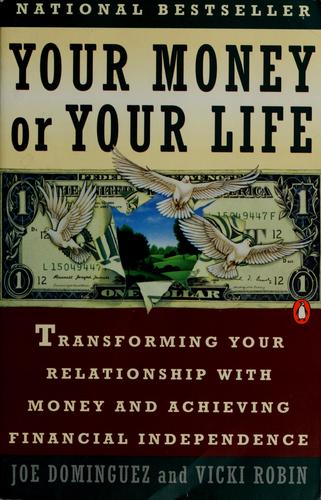
Your savings rate, not your salary, sets the date. Cutting spending beats raising income because it works on both sides of the equation, and a rate you can sustain beats a rate you can brag about. The Simple Path to Wealth and Your Money or Your Life both build their whole argument on this one ratio.
📚 Recommended reading
Print editions of books covered on this site that go deeper into this topic.
See all 12 books ranked in “Best Personal Finance Books for Beginners” →