Your Money or Your Life
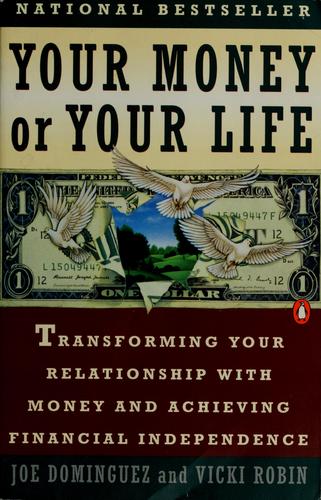
A classic that reframes money as life energy: track what you trade your hours for, spend on what truly satisfies you, and reach the crossover point.
The Core Idea
The book offers a single, radical reframe: money is not the goal, it is a receipt for your life energy. Every dollar you spend was paid for with hours of your one life, and once that trade becomes visible, spending decisions begin to change on their own, without willpower or shame. The argument is not that money is evil but that it is a substitute for time, and most of us trade away far too much of the latter for the former without ever doing the exchange rate in our heads. The practical genius of the book is that it turns an abstract moral idea into a number you can actually watch move.
Nine Steps, One Question
Robin and Dominguez build a step-by-step programme around one recurring question: is this purchase worth the hours of my life it costs? You begin by calculating your real hourly wage, adding commuting, preparation and recovery time to the hours a job actually takes, so the true price of a treat becomes obvious. A television that costs a week of your life looks very different from one that costs a single afternoon. The steps are not meant to be clever; they are meant to be done, in order, until the numbers start telling you a story about your own priorities.
- Track every dollar that comes in and every dollar that goes out.
- Total the life energy you earned and the life energy you spent.
- Ask whether each expense brought fulfillment or merely followed habit.
The Fulfillment Curve
Spending buys genuine satisfaction only up to a point. Beyond that peak, more stuff delivers less joy and more upkeep — insuring, storing, repairing and quietly worrying about it. The goal is to find your own personal enough, the top of the curve, and then stop climbing, which frees money, time and attention all at once. Marketing works hard to keep you past that peak, because a satisfied customer is a poor market and a contented person is hard to sell to. The tricky part is that the peak sits at a different height for everyone, so the only way to find yours is to look honestly at what actually made you happy last month.
The Crossover Point
As you close the gap between what you earn and what you spend, savings quietly accumulate. The crossover point is where income from your investments covers your living costs, and paid work becomes a choice rather than a necessity. This early vision of financial independence arrived decades before the modern movement popularised the idea, and it grew out of a household budget and a conscience rather than a start-up exit or a viral side hustle.
What Has Aged Well
The life-energy lens is timeless and quietly powerful, and the emphasis on tracking — however tedious it feels at first — produces real insight about where your money and hours actually go. The idea of enough is a healthy antidote to endless optimisation and comparison, and the book’s moral seriousness about work, consumption and community still feels rare and genuinely useful in a culture that measures people by what they own. Many modern money writers have borrowed the crossover idea without crediting how early and how clearly it appears here, and the underlying ethic has aged better than most of the investment advice around it.
Getting Started Without Shame
The authors are careful to say the process is not about self-punishment. Tracking your spending is meant to be neutral evidence, not a verdict on your character, and the goal is curiosity rather than guilt. If the first month looks messy, that is normal and useful information. The point is to see clearly, adjust gently and keep going, because the change that lasts is the one that comes from understanding your own life rather than from obeying someone else’s rules.
Honest Limits
The original edition carried assumptions about investment returns and recommended some instruments most advisers would now treat with caution, so borrow the framework and leave the projections behind. The steps are demanding and occasionally preachy, and for someone on a low, fixed income the arithmetic can feel discouraging rather than empowering. Read it for the questions it asks about time and value, not for its dated numbers or its most opinionated passages.
🔑 Key actionable ideas
- Money is a receipt for the hours of your life you traded for it.
- Calculate your true hourly wage, including hidden work costs.
- Track every dollar until your real spending patterns are visible.
- Find your own enough — the peak of the fulfillment curve.
- The crossover point makes paid work optional, not mandatory.
- Spend deliberately on what satisfies and cut the rest without guilt.
- A dated investing chapter should be updated, not copied.
Who is this book for?
Readers questioning the work-spend treadmill who want a values-first approach to money, and anyone drawn to financial independence but uneasy with hustle culture.
Final verdict
A quietly profound book whose life-energy lens outshines its dated investing advice. Read it for the questions, not the return projections.