The Millionaire Fastlane
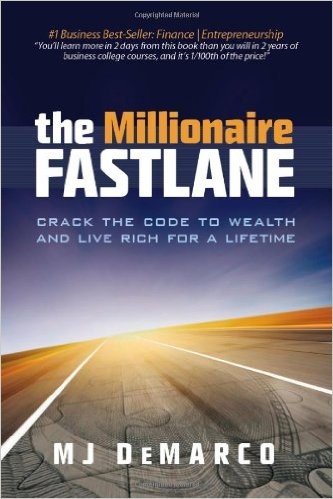
A blunt attack on the slow path to wealth: why renting out your time keeps you stuck, and how owning a scalable system can buy back your freedom.
The Core Idea
The Millionaire Fastlane argues that popular money advice quietly sells a slow, joyless road and calls it virtue. DeMarco, who built and eventually sold a limousine business, insists there is another way: own a system that produces income whether or not you are working, instead of renting out your hours for decades and collecting the reward only when you are too tired to enjoy it. The book is part philosophy and part provocation, and it spends as much energy dismantling comfortable beliefs as it does proposing new ones. Whether or not you agree with his conclusions, the questions he raises about time and ownership are hard to forget.
Three Roads to Wealth
DeMarco sorts people by the road they travel, and each road carries its own beliefs about time, money and work. The labels are blunt on purpose, because he wants you to recognise which road you are actually on before you try to change direction. Most people, he claims, believe they are on the responsible middle road while behaving like the first.
- The Sidewalk: live for today, spend everything, treat credit as income. Wealth is a look, and the future is someone else’s problem to solve.
- The Slowlane: work hard, save a slice of each pay, invest steadily, and retire modestly after forty years of loyal service.
- The Fastlane: build or buy a system that scales, so income stops being tied to your hours. Control, leverage and scale replace penny-pinching as the real levers.
Why the Slowlane Disappoints
The book is harshest about the advice to skip the coffee and wait. Saving a few dollars a day cannot outrun the arithmetic of an ordinary salary, and the true cost is not money but time — the one resource you can never earn back. A plan whose best outcome is being old and comfortable is, to DeMarco, a bad trade dressed up as discipline. He adds that a single job is a fragile asset: one decision by one manager can end it overnight, and with it the plan you spent years trusting.
The Law of Effection
His central engine for wealth is what he calls the Law of Effection: the more people you affect, and the more deeply you affect them, the more you can earn. A skilled dentist helps a few thousand patients across an entire career, while a product that removes a small annoyance for millions can reward its creator far beyond any salary. Scale, not effort alone, sets the ceiling — which is why identical hours produce wildly different outcomes depending on what they are aimed at. This reframing pushes you to ask whether your work can reach ten people or ten million.
Money Trees and Control
A business is worth owning only if it behaves like what he calls a money tree: it keeps producing after you step away. That demands two things — control and the ability to multiply. A job or a gig with no systems is a tree that dies the moment you stop watering it, which is why he treats ownership and automation as the real goals rather than busy, unbounded self-employment. The owner chained to the counter has simply traded one boss for a worse one, and the hours can be longer than any office ever demanded.
From Consumer to Producer
The practical shift is to stop asking what you can buy and start asking what you can make. DeMarco suggests hunting for everyday frustrations, because complaints are unmet demand in disguise, and he warns against ideas that excite only their creator. The honest test is simple: will strangers pay for this, repeatedly, without you standing beside it to explain it? If the answer needs a long pitch, or if you are the only person who finds the problem interesting, the idea is probably not ready for your years.
Honest Limits
The energy is genuine, and the warning about trading your life for a late pension lands hard. Still, the book can read as a pitch for entrepreneurship, and it understates how often businesses fail and how much luck and timing matter. It also skips past the quieter truth that a steady job paired with aggressive, low-cost investing can build real freedom for people who never want to run a company. Take the mindset as fuel, keep the maths honest, and never confuse confidence with a guarantee.
🔑 Key actionable ideas
- Trading hours for money caps your income; owning a scalable system does not.
- Speed to wealth depends on scale and leverage, not on saving spare change.
- Build assets that keep producing when you are not standing next to them.
- Look for everyday frustrations — complaints are unmet demand in disguise.
- A single job is a fragile asset controlled by someone else.
- Control and multiplication are the two tests a business must pass.
- Entrepreneurship raises the ceiling but also the risk; judge honestly.
Who is this book for?
Ambitious readers frustrated by standard advice to save and wait, especially would-be founders and side-project builders who want a framework for choosing what to build.
Final verdict
Motivating and refreshingly direct about the limits of pure frugality, but best read as mindset fuel rather than a business plan. Keep the optimism and add a realistic view of failure rates and luck.