
The 8 Best AI Books for Beginners (2026)
The best AI books for beginners: how modern AI works, what it changes, and the risks worth understanding — without a maths degree.
Most AI books are written for one of two audiences: engineers who want to build models, or readers who want to be frightened. This list is for the third group — people who want to understand what the technology does, where it fails, and how it will affect their work.
None of these require calculus. All of them require you to think, which is the point.
📊 Quick picks
The short version, with the reason each book is here.
| # | Book | Best for | Rating | |
|---|---|---|---|---|
| 1 | AI Superpowers Kai-Fu Lee |
using AI tools well today | 4.6/5 | Amazon |
| 2 | Human Compatible Stuart Russell |
the human side of AI design | 4.5/5 | Amazon |
| 3 | Life 3.0 Max Tegmark |
the big picture of intelligence | 4.5/5 | Amazon |
| 4 | Superintelligence Nick Bostrom |
understanding the risk argument | 4.4/5 | Amazon |
| 5 | Homo Deus Yuval Noah Harari |
AI, data and the future of society | 4.5/5 | Amazon |
| 6 | The Master Algorithm Pedro Domingos |
how algorithms shape daily life | 4.5/5 | Amazon |
| 7 | Algorithms to Live By Brian Christian & Tom Griffiths |
borrowing computer science for decisions | 4.6/5 | Amazon |
| 8 | Weapons of Math Destruction Cathy O'Neil |
the risks of algorithmic decisions | 4.4/5 | Amazon |
As an Amazon Associate we earn from qualifying purchases. This does not change the price you pay.
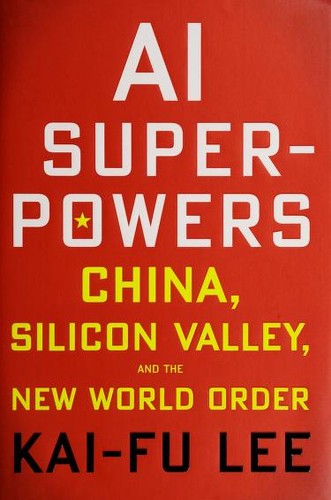
AI Superpowers
Kai-Fu Lee · 2018 · 288 pages · 4.6/5
Best for: using AI tools well today
A practical guide to working with large language models: prompting, delegation, verification and the limits that matter. The most immediately useful book on this list.
Why AI will reshape the global economy and jobs, and how to prepare for the wave before it arrives.
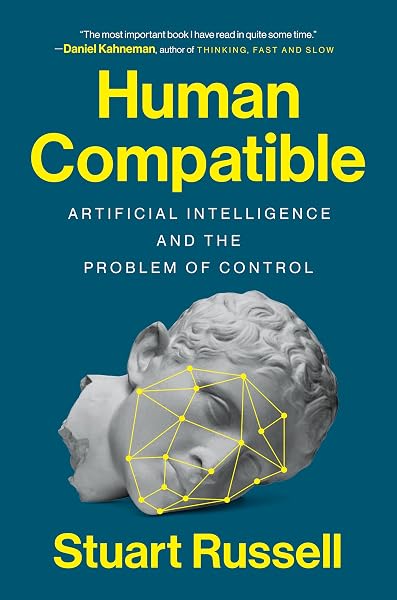
Human Compatible
Stuart Russell · 2019 · 352 pages · 4.5/5
Best for: the human side of AI design
Stuart Russell's short, readable argument that AI should be built around human preferences rather than fixed objectives. It gives you vocabulary for the safety debate.
The clearest case that the real problem with AI is not malice but competence without uncertainty, and what to do about it.
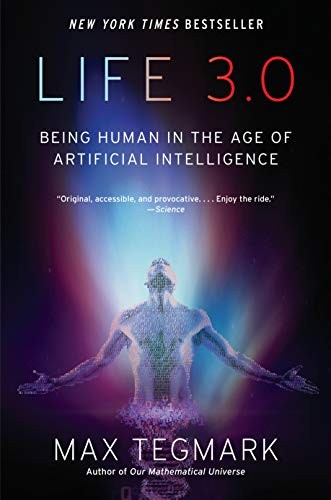
Life 3.0
Max Tegmark · 2017 · 384 pages · 4.5/5
Best for: the big picture of intelligence
Max Tegmark's tour of what intelligence is and what it might become. Broad, occasionally speculative, and a good map of the questions.
Max Tegmark maps the choices ahead for artificial intelligence — utopia, catastrophe or something in between — and why values matter as much as code.
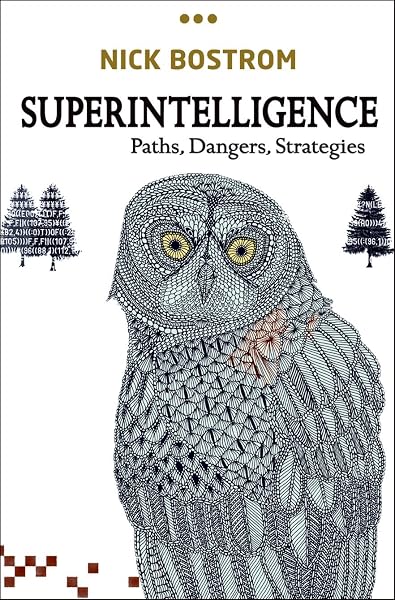
Superintelligence
Nick Bostrom · 2014 · 328 pages · 4.4/5
Best for: understanding the risk argument
Bostrom's careful, unsettling book about control problems. Read it critically — some assumptions are contested — but it is the reference point for the debate.
The definitive exploration of what happens when machine intelligence surpasses ours — paths, risks and the control problem.
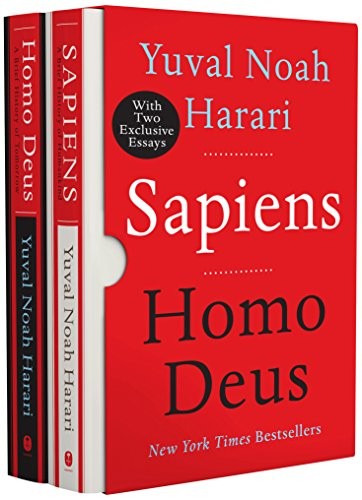
Homo Deus
Yuval Noah Harari · 2016 · 448 pages · 4.5/5
Best for: AI, data and the future of society
Harari's broad historical framing is loose in places, but it is excellent at connecting AI to data, power and meaning rather than treating it as a gadget.
Harari looks past famine, plague and war to ask what humanity will chase next: immortality, engineered happiness and god-like power over life itself.
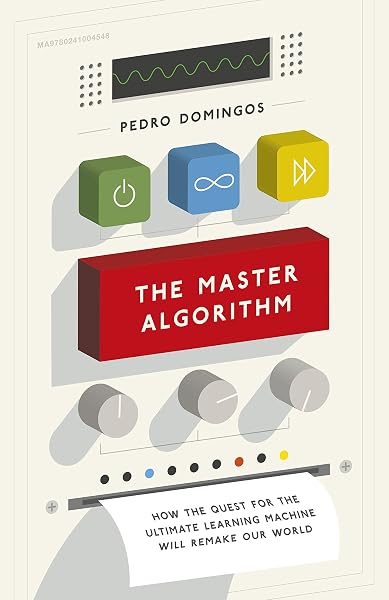
The Master Algorithm
Pedro Domingos · 2015 · 329 pages · 4.5/5
Best for: how algorithms shape daily life
A clear explanation of the algorithms behind feeds, prices, recommendations and decisions — and why they can be both useful and unfair.
A clear tour of the five tribes of machine learning and the quest for one algorithm that can learn anything.
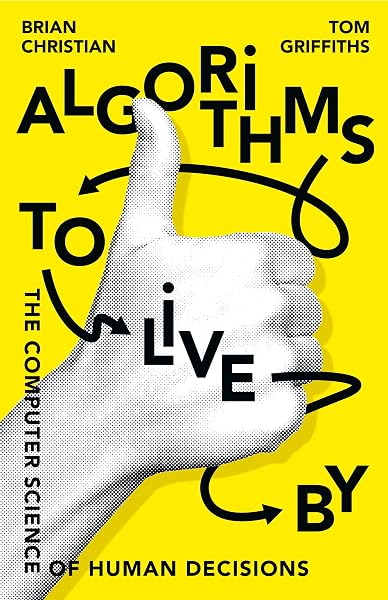
Algorithms to Live By
Brian Christian & Tom Griffiths · 2016 · 368 pages · 4.6/5
Best for: borrowing computer science for decisions
Not an AI book exactly, but the best introduction to the ideas AI is built on: search, optimisation, Bayes and trade-offs. Readable and genuinely useful.
Computer science for everyday life: optimal stopping, sorting, caching and Bayesian thinking applied to human decisions.
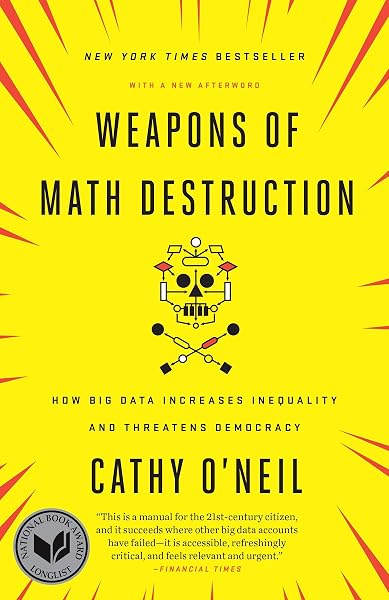
Weapons of Math Destruction
Cathy O'Neil · 2016 · 288 pages · 4.4/5
Best for: the risks of algorithmic decisions
A critical look at models used in finance, policing and hiring. It balances the optimism of the other books with evidence of what happens when models meet institutions.
When an algorithm decides who gets a loan, a job, or a longer sentence, and nobody can explain why. A mathematician on how models encode bias and escape accountability.
How to choose
If you mainly want to use AI at work, start with AI Superpowers and The Master Algorithm. They explain the tools and the mechanisms without requiring code.
If you care about safety and policy, read Human Compatible and Superintelligence, then balance them with Weapons of Math Destruction.
If you want the intellectual big picture, start with Life 3.0 and Homo Deus, but treat both as arguments rather than settled science.
Frequently asked questions
What is the best AI book for a complete beginner?
AI Superpowers is the most practical starting point: it focuses on what the tools do, how to use them and where they fail. Life 3.0 is the better choice if you want the broader intellectual picture instead.
Do I need a technical background to read these?
No. None of the books on this list require programming or advanced maths. The Master Algorithm and Algorithms to Live By explain the core ideas in plain language.
Which AI book is best on risk?
Human Compatible for a readable argument, Superintelligence for the deeper theoretical case, and Weapons of Math Destruction for real-world harms that already exist.
Are these books already out of date?
The specific model names may be, but the mechanisms, risks and design questions have not changed nearly as fast. Read them for the reasoning, then check current tool documentation for specifics.
📚 More buying guides
More ranked lists for the problems you are solving next.