Homo Deus
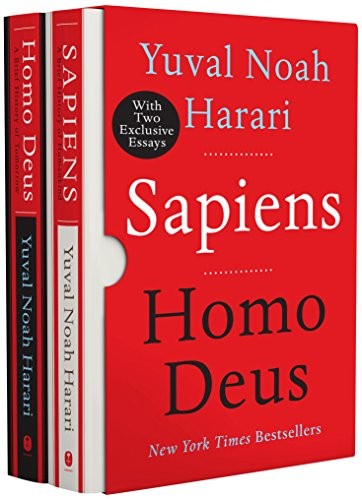
Harari looks past famine, plague and war to ask what humanity will chase next: immortality, engineered happiness and god-like power over life itself.
The Core Idea
This is a forward-looking sequel. Having traced how humans came to dominate the planet, Harari asks what we will do with that power now that the old scourges — famine, plague and war — have shrunk from inevitable fate to manageable problems for much of the world. The book’s premise is that when survival stops being the organising question, a civilisation does not simply relax; it invents new ambitions, and those ambitions may be far more radical than anything we have pursued before.
The New Agenda
With bare survival less urgent, humanity’s grand projects turn inward and upward: immortality, happiness and divinity. Biotechnology, medicine and data are aimed at upgrading the body and mind, and the same tools could, in his telling, lift some people toward something like godhood while leaving others behind. The dream of defeating death, engineering contentment and gaining creative power over life itself is no longer confined to religion or science fiction, and Harari treats it as the logical next step of a species that has already solved most of what used to kill it.
The Death of the Liberal Story
Harari argues that the twentieth century’s faith in free will, human rights and elections is under strain. Three forces press on it: technology that can know us better than we know ourselves, a global order too weak for planetary problems, and questions of meaning that liberalism struggles to answer convincingly. He does not declare the liberal story dead so much as wounded and unsure of itself, competing against older creeds and newer data-driven ones.
Dataism
His forecast is a new worldview he calls Dataism, in which the universe is flows of information and the highest value is processing it. Under that creed, humans may become less like agents and more like sensors feeding a system — valuable not for their consciousness but for the data they produce. It is a deliberately unsettling idea, and its power comes from how naturally it extends trends already visible in how we use technology.
The Useless Class
If intelligence separates from consciousness, machines may perform work without awareness while large numbers of people find their labour no longer needed. Harari worries less about robot rebellion than about a society that quietly writes many people out of its story, with economic and political consequences that follow. The danger, in his account, is not dramatic war with machines but a slow redefinition of who counts, decided mostly by convenience and economics.
What the Book Does Well
Its strength is provocation and synthesis: it gathers threads from biology, computing and economics into one vivid picture and forces the reader to consider consequences most of us prefer to postpone. That discomfort is the point, and it makes for lively, memorable reading. Even where the argument is thin, the questions are framed with unusual clarity and a good deal of wit, and the historical asides are often more convincing than the forecasts they are meant to support.
Technology and Power
A quieter theme runs beneath the spectacle: technology is never politically neutral. The ability to read minds, extend life or replace workers will land in a world of unequal power, and whoever controls the tools shapes who benefits. Harari suggests that the deepest risk is not machines taking over but a small group using data and biology to concentrate advantage so effectively that the rest of society cannot catch up. That worry is more concrete than the talk of godhood, and arguably more urgent.
The book also asks what happens to meaning when old stories fade. Nationalism, religion and liberal humanism each offered a story about why life matters and how to live well, and Harari suspects none of them is fully up to the coming century. He does not claim to have a replacement; he simply warns that a vacuum of meaning tends to be filled by whatever is loudest and most convenient, which is rarely the most humane.
Honest Limits
Critics note that the sweep can blur into speculation, that the evidence behind near-future scenarios is often thinner than the confident tone suggests, and that some predictions are assumptions dressed as forecasts. Read it as a map of live debates rather than a timetable, and check the specific claims against specialists before treating any of them as settled.
🔑 Key actionable ideas
- Material progress has shifted humanity’s ambitions beyond survival.
- Immortality, happiness and power are the emerging projects.
- Liberal faith in free will faces pressure from data and algorithms.
- Dataism treats information, not experience, as the highest value.
- Automation may create a class whose labour is simply unwanted.
- The book provokes more than it proves; verify the predictions.
- Ideas like these shape policy and ethics — worth arguing about.
Who is this book for?
Readers who enjoy big-picture history and technology, and anyone wanting a provocative tour of where biotechnology, AI and data might be leading society.
Final verdict
A stimulating, wide-ranging provocation with a bold thesis and some speculative leaps. Best read alongside more cautious, technical accounts of the same trends.