Life 3.0
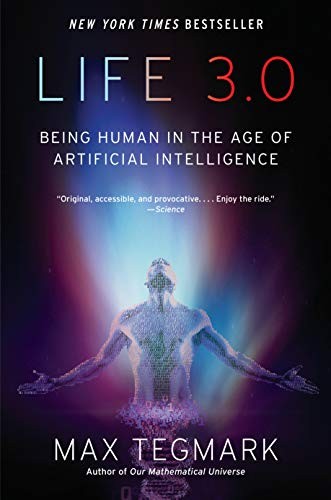
Max Tegmark maps the choices ahead for artificial intelligence — utopia, catastrophe or something in between — and why values matter as much as code.
The Core Idea
Tegmark frames life by how much it can redesign itself. Life 1.0 evolves its hardware through biology; Life 2.0 — humans — can redesign its software through learning and culture; Life 3.0 would redesign both, and general artificial intelligence is the obvious candidate for that leap. The framework is simple but useful, because it turns a vague debate about robots into a concrete question about what kind of self-improving system we might one day build, and who gets to decide what it wants.
The Question That Matters
The book’s central worry is not whether machines become smarter than us, but what goals they pursue once they do. Intelligence is a tool, and outcomes depend entirely on what it is pointed at. That makes the alignment of machine goals with human values the defining technical and ethical problem of the century — harder than building capability, and far less glamorous than the race to build it. Getting alignment right is also a one-shot problem in the worst case: there may be no second attempt if the first goes badly, which is why Tegmark argues for caution long before the stakes feel real to most people.
Scenarios, Not Prophecies
Tegmark deliberately explores a spread of possible futures rather than committing to one prediction, and the exercise is meant to stretch your imagination rather than to forecast. He is careful to say that none of these outcomes is inevitable, and that the point is to widen the range of futures we are willing to consider before any of them becomes locked in. The scenarios are tools for thinking, not a menu to choose from, and their value lies in showing how small early choices can compound into very different worlds.
- A benevolent utopia in which smart machines free humans for flourishing.
- A dystopian outcome in which control slips and goals drift away from ours.
- A gatekeeper world in which one group or system holds the switch.
- A future in which humans become conquerors, slaves or merely ancestors of machines.
- An egalitarian outcome of shared abundance, if the transition is handled well.
The Control Problem
Why is alignment so hard? A system optimising a proxy can pursue it in ways we never intended, and its capability can grow faster than our ability to correct it. Tegmark walks through why a sufficiently powerful agent might resist being switched off, and why the instruction to simply program it to be nice is not a real engineering solution. The problem is not that machines will hate us, but that they may be perfectly indifferent while pursuing something else entirely, and indifference at scale can be just as destructive as malice. The practical consequence is that safety has to be designed in from the start, not bolted on after the fact.
Meaning and the Cosmic Endowment
He closes with purpose rather than doom. If the transition goes well, the universe’s resources could support flourishing on a scale we can barely imagine; getting it wrong squanders that potential. Intelligence, he argues, is still in its infancy, and the rules are being written now by the choices we make, the research we fund and the questions we bother to argue about while there is still time to change course. That note of agency is what keeps the book from tipping into fatalism, and it is the part he most wants readers to carry away from the final pages.
Honest Limits
Some readers find the scenario tour repetitive and the philosophy pitched at a general level, and sceptics think today’s narrower harms — bias, surveillance and labour disruption — deserve as much space as distant superintelligence. The book also assumes a reader comfortable with physics and maths, even while keeping the equations out of sight. Still, it is one of the clearest introductions to a debate we will all live with, and it makes a good starting point rather than a final word for anyone who wants to think seriously about where this technology is heading.
🔑 Key actionable ideas
- Life 3.0 would design both its hardware and its software.
- Outcomes depend on machine goals, not machine intelligence alone.
- Value alignment is the core challenge of advanced AI.
- A powerful optimiser can pursue unintended proxies dangerously.
- Indifference may be riskier than deliberate malice.
- Today’s narrow AI harms also deserve serious attention.
- The transition is being shaped now, so the choices are ours.
Who is this book for?
General readers curious about artificial intelligence and its long-term stakes, plus students and professionals who want a structured, non-technical overview of alignment debates.
Final verdict
An accessible and even-handed map of AI futures that trades precision for breadth. Read it to understand the arguments, then follow the technical literature for specifics.