The Index Card
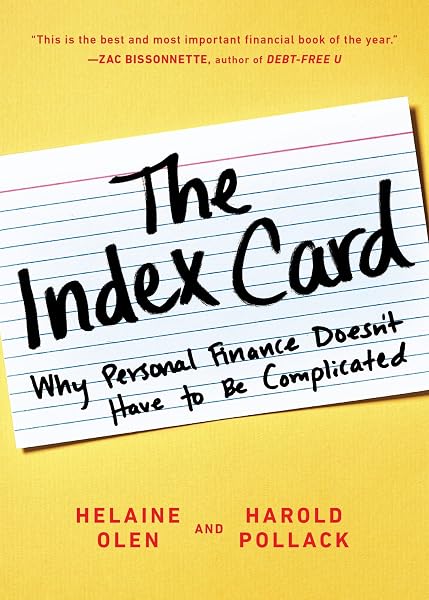
The entire case for simple personal finance, written on an index card because it really does fit. Save, buy index funds, avoid debt, ignore the noise.
A card is enough
The book began as a blog post. Harold Pollack, a professor, said in an interview that the best personal finance advice could fit on a single index card. When readers asked him to prove it, he photographed one.
The point was not that finance is trivial. It is that the useful part is short, while the industry is built on making it feel long. Every extra product, alert, and strategy is a chance to charge you something.
Fees compound too
A one percent annual fee sounds tiny. Over forty years it can consume a quarter or more of what you would otherwise have, because the fee is charged on the growing balance, not the original deposit.
The cruel part is that you never see the money leave. It is not a bill. It is simply a smaller number than there would have been. This is why the authors treat fees as the first thing to fix, before anything clever.
Boring beats clever
The book does not claim index funds win every year. It claims they win the argument over a lifetime, because no one can reliably pick the winning stock or manager in advance, and those who try pay for the privilege.
The evidence is consistent across studies of professional managers: after fees, most underperform a simple broad index over long periods. If professionals cannot do it, the case for trying at home is weak.
Debt and the emergency fund
The card includes two unglamorous items. Pay off high-interest debt, because a guaranteed twenty percent return elsewhere does not exist. And keep an emergency fund in cash, because the alternative is borrowing at the worst possible moment.
Neither is exciting, and both matter more than asset allocation for most households starting out.
The honest conclusion
There is no secret. Save a real percentage, buy the whole market cheaply, avoid consumer debt, hold a small cash buffer, and ignore the news. That is the entire book.
What makes it worth reading is the explanation of why so few people do it. The system rewards activity. Your job is to be boring on purpose, for decades, and let the boring thing work.
The bottom line
A short, calm, evidence-based book that treats you as an adult. If you read only one personal finance book, this is a defensible choice, and it will take an afternoon.
🔑 Key actionable ideas
- The advice that works is short enough to fit on a card, and everything longer is mostly sales pressure.
- Fees are the surest predictor of long-run returns: one percent less per year keeps roughly a quarter more over a lifetime.
- Buying individual stocks is not investing, it is hoping. Broad index funds remove the need to be right about any single company.
- High-interest debt is the only certain negative return in your life. Paying it off is a guaranteed gain.
- Automate everything, because the best financial plan is the one that needs no decisions after setup.
Who is this book for?
Beginners who feel overwhelmed by the amount of conflicting financial advice, and anyone who suspects the industry is selling complexity rather than results.
Final verdict
The best short book on personal finance for a beginner. It will not teach you to pick stocks, which is exactly its argument. Clear, honest, and refreshingly free of the usual promises.