The Clean Coder
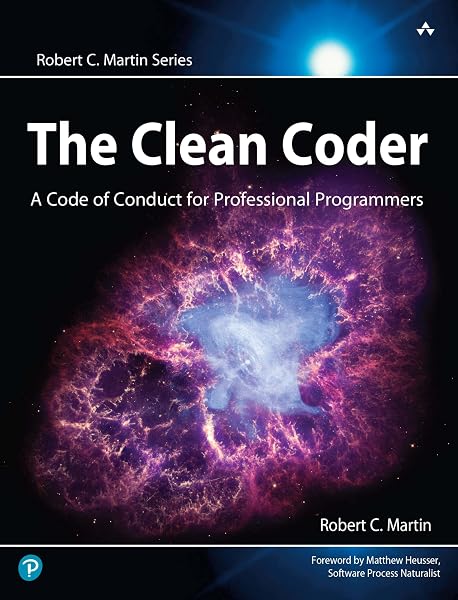
What separates a programmer who writes code from a professional who can be trusted with a deadline. Mostly it is honesty about time and quality.
The cost of yes
Martin tells the story of shipping a product he knew was broken because he had promised a date he knew he could not meet. The damage was not the bug. It was that everyone around him had planned around a promise he never believed in.
The lesson is uncomfortable. Agreeing to something impossible feels cooperative, but it transfers your problem to people who cannot solve it. A clear no early costs far less than a missed date late.
Quality under pressure
When a deadline tightens, the instinct is to skip tests, reviews, and refactoring. Martin argues the opposite: those are exactly the practices that protect the deadline. Removing them makes you faster today and slower every day after.
If something must give, it should be the features. Deliver a smaller thing that works rather than a larger thing that does not. Users forgive a missing feature. They do not forgive a broken one.
Saying no professionally
Many engineers cannot say no because it feels like insubordination. Martin reframes it. Your manager is asking for information about what is possible, and a comfortable answer that is wrong is a disservice rather than loyalty.
The template he suggests is simple. State what you can do by the date. State what you cannot. Offer the trade — which features, which quality, which date — and let the person with the business context choose.
Estimation as a range
An estimate is a probability distribution, not a number. A good estimate comes with a confidence level, and it is updated when new information arrives rather than defended until it quietly fails.
This is the part most engineers skip. Learning to say "this is likely to take five to eight days, and I am about eighty percent confident" turns estimation from a source of conflict into a useful planning tool.
Testing and the professional standard
Martin is uncompromising here. A professional does not ship code they believe is broken, and does not let a schedule decision override that belief without saying so explicitly.
He also insists on the softer half of professionalism: communicating early, treating your own attention as a resource, and not being the person who is always the bottleneck. Being right is not enough if nobody can plan around you.
Owning your skills
The last part of the book is about staying valuable. Technology moves, and no one is going to schedule your learning for you. Reading, side projects, and deliberate practice are the difference between thirty years of experience and one year repeated thirty times.
The bottom line
Half the book is about software and half is about being a trustworthy colleague. The second half is the more valuable one, and it is the one most technical books skip.
🔑 Key actionable ideas
- Saying yes to a deadline you know is impossible is not optimism, it is a lie that costs the whole team later.
- The professional move under pressure is to cut scope, not testing. Quality that degrades under pressure was never quality.
- You cannot be a professional if you cannot say no. Refusing an unreasonable request is a job skill, not rudeness.
- Estimation is a probability distribution, not a promise. Give ranges and confidence, and update them as you learn.
- Your career is your responsibility. Employers rarely provide the training that keeps you employable, and that is not their fault.
Who is this book for?
Working programmers, especially those moving from writing code to owning outcomes, and anyone who has missed a deadline they never believed in.
Final verdict
The rare technical book that is mostly about conduct rather than technique. Some anecdotes are dated and the tone can be preachy, but the core advice about honesty, estimation and quality holds up completely.