Designing Data-Intensive Applications
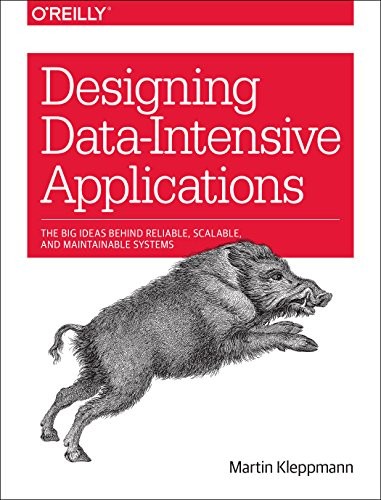
A deep, vendor-neutral tour of how modern data systems really work — storage engines, replication, consensus and the trade-offs that no architecture can escape.
The Core Idea
Most technology books argue about tools. This one deliberately steps back a layer and asks what all serious data systems are actually made of: how bytes are laid out on disk, how independent machines manage to agree on what is true, and how faults are contained so that one broken component does not drag the whole product down. Understand those mechanics and you can evaluate any database or stream processor on its merits rather than trusting a vendor's slides.
The frame that holds the book together is a trio of properties — reliability, scalability and maintainability. Nearly every tense engineering argument about microservices, SQL versus NoSQL, or eventual consistency is really a disagreement about how to trade one of these against another. Naming the trade-off does not make it vanish, but it turns a religious war into a design decision. Kleppmann keeps returning to this: there is no free lunch, only a choice about where you pay.
Reliability, Scalability, Maintainability
Reliability means the system keeps behaving correctly even when hardware dies, software has bugs or a tired human runs the wrong command. Scalability means there is a credible, measured answer to what happens when load doubles, backed by numbers rather than adjectives. Maintainability means the next engineer can read the system, change it safely and operate it without heroics or folklore. Kleppmann is careful to note that scalability is not a property a system simply has: it is relative to a particular kind of growth, and a design that shrugs off extra reads may collapse under writes.
Data Models Shape the Questions You Can Ask
The book walks from relational tables to documents, graphs and full-text search, treating each model as a different bargain. Relational schemas are strong when data is richly connected and you cannot predict every query in advance. Document stores are comfortable when records are self-contained and read as a unit. Graph models win when the relationships themselves are the interesting data. The practical lesson is that your choice quietly decides which questions will feel natural and which will feel like fighting the tool.
What Really Happens Inside a Storage Engine
Beneath every polished database sit two ideas working together: an append-only log of writes and a structure that keeps reads fast, usually a balanced tree or a set of sorted files merged in the background. That split explains a lot of everyday behaviour — why some stores write quickly but read slowly, why compaction exists at all, and why an index is never free. Faster reads are paid for with slower writes and more disk, and no clever trick dodges the bill.
Replication, Partitioning and the Cost of Agreement
Once data lives on many machines, the genuinely hard problem is agreement. Replication buys durability and extra read capacity, but when the network splits it forces a choice between staying consistent and staying available. Partitioning buys scale but adds hot spots, awkward rebalancing and cross-shard queries. Kleppmann is honest that no architecture escapes these problems; every design simply chooses where it would rather suffer, and the job of an engineer is to make that choice deliberately rather than by accident.
Transactions, Consensus and Derived Data
The middle of the book revisits ideas most developers take for granted — atomicity, isolation and the strange anomalies that appear at weaker isolation levels — then climbs to consensus: how a cluster elects a leader and agrees on the order of events. The tone is reassuring and sceptical at once; these tools are powerful but not magic, and using them without understanding their guarantees is how quiet data corruption begins. The closing chapters reframe processing as derived data: batch jobs recompute history in chunks, stream processors react to events as they arrive, and both build views from one source of truth.
A Fair Critique
This is a demanding book and it is meant to be. It teaches principles rather than product configuration, so readers hunting for a quick recipe for their own stack will need to look elsewhere, and the theory can feel heavier than a busy job requires. Some chapters have aged gently as specific tools changed. Even so, as a map of how modern data infrastructure behaves, nothing else covers the same ground with this much clarity and balance, and the mental models stay useful long after the products named in it are replaced.
🔑 Key actionable ideas
- Judge data systems by their trade-offs, not by their marketing.
- Reliability, scalability and maintainability are the three properties that matter.
- Your data model quietly decides which queries are easy.
- Fast reads are always paid for with slower writes or more storage.
- Replication forces a choice between consistency and availability.
- Distributed consensus is powerful but easy to misuse.
- Build derived views from one source of truth instead of syncing many.
Who is this book for?
Backend engineers, architects and data platform teams who want to reason about systems from first principles rather than memorise tool documentation.
Final verdict
A dense, honest and durable reference. It will not teach you a product, but it will teach you how to think — and that skill outlives every framework in it.