Self-Discipline Is a System, Not a Trait
People who look disciplined are rarely resisting temptation. They have arranged their life so the temptation never gets a vote.
Watch someone who seems unusually disciplined and the first thing you notice is how little struggle there is. They do not appear to be fighting themselves at six in the morning. That is not because they have more willpower than you. It is because the fight was arranged to happen earlier, when it was cheap.
The willpower story is wrong
For about fifteen years the standard explanation was ego depletion: the idea that self-control draws on a finite fuel that runs down with use, like a battery. It produced hundreds of studies and a very satisfying story.
Then it failed to replicate. A large multi-lab attempt published in 2016, coordinated across more than twenty laboratories with a pre-registered protocol, found no meaningful depletion effect. The original result was most likely a statistical artefact of small samples.
This matters practically. "I ran out of willpower" is not a mechanism you can work with. It is a description of a situation you have not yet changed.
What disciplined people actually do
They remove the decision. The gym bag is by the door the night before. The phone charges in another room. The unhealthy food is not in the house. The work is open on the screen before the difficult part of the day begins.
None of that is heroic, and that is the point. Each item converts a moment of choice into a moment of no choice, and choices are where discipline is lost.
Implementation intentions
The most reliably supported technique in this area is the if–then plan, developed by Peter Gollwitzer. You decide in advance: "If it is seven in the morning, then I write for twenty minutes." "If someone offers me a cigarette, then I say I have quit."
The mechanism is that the cue is settled before the situation arrives. When the moment comes, the action is triggered by the environment rather than negotiated by the conscious mind. The plan does not make you stronger. It moves the decision to a moment when you are not under pressure.
The format matters. Vague intentions ("I will exercise more") do nothing. Specific cue plus specific action does something.
Friction, in both directions
Add twenty seconds to the behaviour you want to avoid. Remove twenty seconds from the one you want. Log out of the app; keep the book on the table.
Twenty seconds sounds trivial, and it works because most unwanted behaviour is a reflex, not a decision. A reflex that meets friction loses to the default. You are not defeating the urge; you are making sure the urge does not get a turn.
The minimum version
Every system needs a floor. Two pages. One call. Five minutes. The floor is what you do on the days when the full version is not available.
Without a floor, a bad day becomes a missed day, and a missed day becomes a broken streak, and a broken streak becomes an identity change. With a floor, the worst day still counts.
Identity, and its limit
"I am someone who writes" is a more durable motivator than "I want to write". But identity without evidence collapses quickly, because you can tell when you are lying to yourself.
The sequence is therefore: make the repetitions cheap, accumulate evidence, and let the identity follow. Not the other way round.
When discipline is the wrong tool
If a goal needs constant force to sustain, the design is wrong. That is not a character problem. It is a signal to change the environment, lower the target, or admit the goal was borrowed from someone else.
The honest test: could a reasonable person with your schedule do this? If not, the plan is fiction, and no amount of discipline will make fiction true.
The bottom line
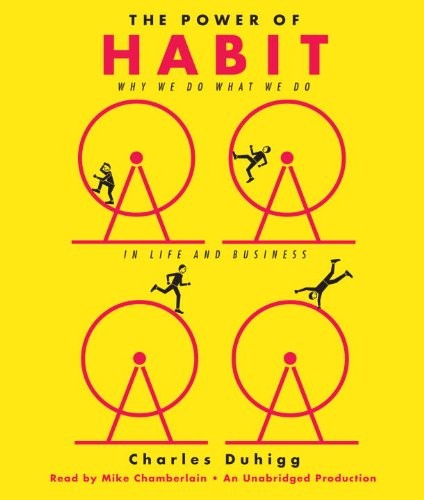
Stop treating self-discipline as a reserve you either have or lack. Pre-decide the cue, add friction to the wrong behaviour, set a floor for bad days, and let identity follow the evidence. Atomic Habits and The Power of Habit both build their method on exactly this shift, from willpower to design.
📚 Recommended reading
Print editions of books covered on this site that go deeper into this topic.