Digital Minimalism
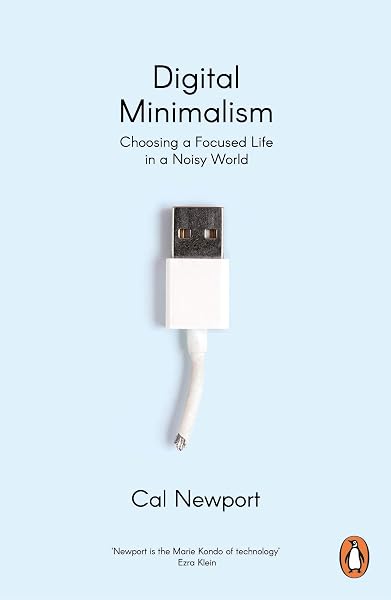
A philosophy for using technology deliberately rather than by default, with a 30-day practice for taking your attention back.
The claim
Newport's argument is not that phones are bad. It is that most people never actually chose their digital habits. The default settings of a few large companies now shape the attention of billions of people, and the resulting life is rarely the one anyone would have picked.
Digital minimalism is the answer he proposes: a philosophy of technology use in which you focus your online time on a small number of carefully selected activities that strongly support things you value, and happily miss out on everything else.
Why the defaults win
Three forces push people toward heavy use:
- Intermittent variable rewards. Unpredictable notifications produce compulsive checking more effectively than predictable ones.
- Social approval as a driver. Many apps are engineered around the desire to be seen and validated.
- The cost is invisible. No single scroll looks expensive; the total is enormous and never shows up on a statement.
The 30-day digital declutter
The book's practical core is a single exercise, run once.
Step 1. For thirty days, remove optional technologies from your life. Optional means it is not required for your job or for genuine health needs.
Step 2. In that time, rediscover analogue activities: reading, walking, in-person conversation, making things with your hands, being bored.
Step 3. After thirty days, reintroduce each tool one at a time, asking three questions:
- Does this tool serve something I deeply value?
- Is it the best way to serve that value?
- How will I use it — with what rules and limits?
Reintroduction is where the method succeeds or fails. A tool that survives the three questions is allowed back with a defined purpose, not on autopilot.
Practices that sustain it
Newport recommends several habits for the long term:
- Solitude. Regular time with no input — no podcasts, no music, no feeds. Thinking requires silence to work.
- Protect conversation. Prefer real-time voice or in-person talk over asynchronous text threads.
- Curate the low-value input. Treat entertainment as a deliberate choice with a limit, not a background hum.
- Reclaim leisure. Fill the free time with something active and skilful, because the vacuum left by an app is not neutral — it pulls you back.
- Join the attention resistance. Understand that you are being optimised against, and set rules accordingly.
What it gets right
The book is unusually practical about a topic usually treated as moralising. It does not demand you delete everything, and it acknowledges that some tools are genuinely valuable. The three reintroduction questions are transferable to almost any habit.
A fair critique
Some readers will find the proposed declutter impractical — for many jobs, messaging is inseparable from work. Newport is also dismissive of the genuine value social platforms provide for creators and small businesses, and the book assumes a level of control over your working environment that not everyone has.
Read it as a framework for deciding, not a rulebook. The habit of asking "is this the best way to serve what I value?" applies well beyond screens.
🔑 Key actionable ideas
- Most people never chose their digital habits — they inherited the defaults.
- Intermittent rewards make checking compulsive by design.
- Run a 30-day break from optional technology to make choices conscious again.
- Reintroduce each tool only if it serves something you deeply value, and is the best way to do so.
- Keep regular solitude: time with no input at all.
- Protect real-time conversation over endless text threads.
- Fill reclaimed time with something active, or the feed will take it back.
Who is this book for?
Anyone who suspects their phone is using them more than they use it, especially knowledge workers and parents.
Final verdict
One of the more honest and practical books on attention. The 30-day declutter is genuinely worth doing once, even if the full philosophy is hard to sustain.